
Professor Nicholas E. Mandrak (he/him)

Nicholas E. Mandrak is a Professor in Biological Sciences at the University of Toronto Scarborough (UTSC) in Toronto, Ontario. He is Program Director of the Conservation and Biodiversity stream of the professional M.Env.Sci. program at UTSC. Nick is a Research Associate of the Royal Ontario Museum and South African Institute of Aquatic Biodiversity. He is a member, and former Co-Chair, of the Freshwater Fishes Species Specialist Subcommittee of COSEWIC. His research interests are the biodiversity, biogeography, and conservation of freshwater fishes, with emphasis on endangered and invasive fishes. Nick has co-authored over 250 primary publications, over 100 government reports, 40 COSEWIC reports, and five books, including the newly revised ROM Field Guide to Ontario Fishes.
Post-Doctoral Fellows:
Dr. Piatã Marques

I am interested in understanding how aquatic organisms adapt to urbanization. In my research, I use a trait-based approach to understand the mechanisms determining the persistence and adaptation of freshwater biota to urbanization. Specifically, I look at how environmental changes (climate, built structures) and society (wealth, race) in cities change characteristics such as reproduction and body size of aquatic biota. My current research goal at CERA is to understand how socioeconomic dynamics shape the diversity of fish in urban streams in the Greater Toronto Area – GTA. I am also researching how socioeconomic factors shape the invasive potential of the Goldfish in urban ponds of the GTA. Read more about Dr. Marques here!
Dr. Melanie Massey (she/her)
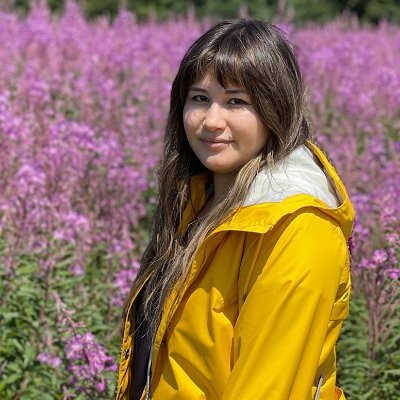 I’m a Liber Ero Postdoctoral Fellow in the Mandrak lab and I’m interested in the intersection of climate change and ecophysiology. I’m currently working on the physiology and human dimensions (public outreach) of invasive Goldfish in Ontario. I earned my PhD from Dalhousie University studying phenotypic plasticity in zebrafish and my MSc from the University of Toronto studying developmental physiology of snapping turtles. Outside of research, I’m a hobby collector; my current fascinations are printmaking, textile art, and beading. You can read more about my research and artwork here!
PhD Lab Members (UTSC):
Alfred Achieng
 Alfred Achieng is a PhD Candidate at the Department of Physical and Environmental Science, University of Toronto, co-supervised by Prof. George Arhonditsis and Nicholas Mandrak. He is currently the international board member of IAGLR. He is also a lecturer(professor) at the Department of Fisheries and Aquatic Science since September 2014, and has done research and published on the African Great Lakes and their catchments for 9 years. His research spreads across diverse studies in aquatic science including, assessment, monitoring and mapping rivers within Lake Victoria basin, developing frameworks for conservation and management of watersheds in Kenya, review of governance, policy development, implementation and challenges in watershed management, education and training in Aquatic Science within African Great Lakes, future success and way forward for scientific approaches on the African Great Lakes and emerging imperatives for governance and research on biodiversity loss in African Ecosystems. He has also applied ecological concepts such as size-spectra and niche breadth to assess changes in aquatic communities (fish and invertebrates) as a result of disturbance gradients in river catchments which led to his interest in ecosystem modelling. Therefore, his PhD focuses on developing food web model for Lake Ontario. He is currently under scholarship at the University of Toronto as an international student; a combination of Federal and Provincial Scholarship, University of Toronto Fellowship and Teaching and Research Assistantship, he is also one of the FishCAST trainees starting September 2023.
Stephanie Allen (she/her), MEnvSci

I am a PhD student in the Department of Physical and Environmental Sciences at UTSC, supervised by Dr. Mandrak. I completed my BSc at Trent University in the Environmental and Resource Science program where I conducted research on the early life history of a lake-spawning population of Brook Trout. I then worked for 20 years as an environmental scientist, predominantly for Ontario First Nations. I am Kanien’keha:ka (Mohawk) from Six Nations of the Grand River Territory. My professional experience has been interdisciplinary and often involving public policy and Indigenous Knowledge. My work experience includes research and projects involving persistent organic pollutants, mercury and First Nations health; environmental impact assessment; contaminated sites; water quality and source water protection; biodiversity and conservation; and environmental law and regulations. In 2019, I returned to university part-time, completing a MEnvSc at the University of Toronto. My research concerned detection probability of one of Ontario’s endangered riverine dragonflies, Rapids Clubtail. I am continuing this research with my PhD investigating the phenology, detection probability and occupancy of three Ontario endangered riverine dragonflies. When I’m not out and about searching for dragonflies, I enjoy bicycling, knitting and live music.
Erik Dean, MEnvSc

I am a PhD student investigating invasive fishes’ populations under future environmental conditions. My background is in Ecology and Evolution (HBSc, UofT 2015), and Environmental Science (MEnvSc, UTSC 2017). Now, under the co-supervision of Nick Mandrak and Andrew Drake, my research explores how freshwater habitats may transition to alternative states in step with climate change, and how this will impact populations of freshwater fishes. More specifically, I intend to apply this research towards the development of models that predict how populations of invasive carp species will fare under future climate scenarios, within the Canadian Great Lakes Basin. My challenge is to employ both traditional approaches along with promising techniques from the fields of Machine Learning, and High Performance Computing to provide comprehensive answers to these questions. In my free time, I enjoy a laundry list of hobbies ranging from recording music to home renovation. Feel free to check out my website erikdean.ca if interested!
Edina Illyes, HBsc
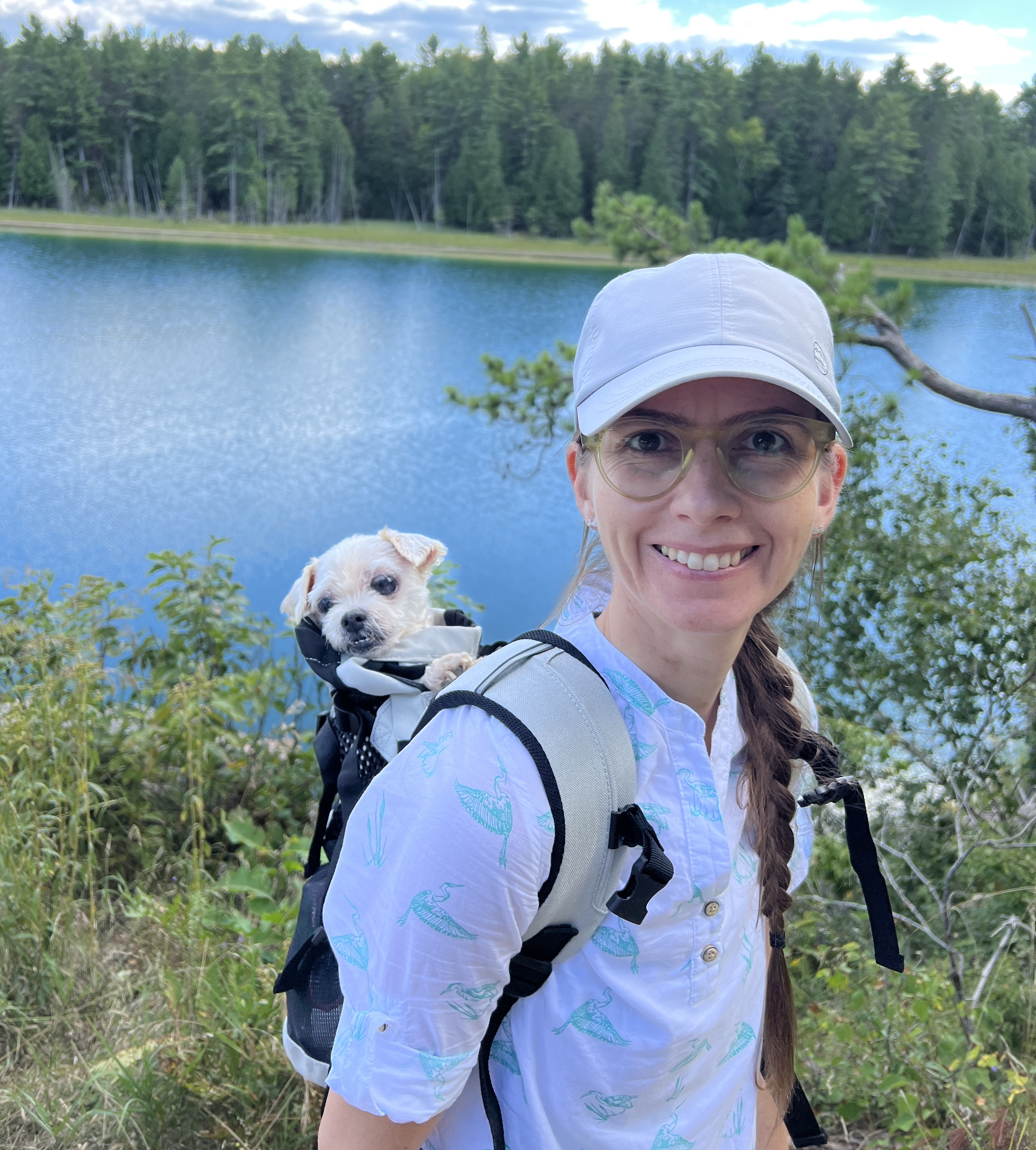
I am a PhD student at the Department of Physical and Environmental Sciences. I graduated from UTSC with Honours Bachelor of Science in Conservation & Biodiversity and Environmental Science. My broad research interests are in biogeography and community ecology. I am currently exploring the impacts of historical dispersal on contemporary lacustrine fish communities of northwestern Ontario in the former glacial Lake Agassiz basin, and anthropogenic effects on fish species in, and potential dispersal from, urban ponds. Otherwise, I love all things nature and use any excuse get outside to identify species and learn about landscape evolution with my best bud, Rum.
Markelle Morphet, HBsc

I am a PhD candidate in the Department of Ecology and Evolutionary Biology. I completed my HBSc in Life Science (Origins of Disease) at McMaster University where I concentrated on behavioural ecology and ecotoxicology for my Honours thesis. My interdisciplinary background has guided my research interests toward applied ecology and conservation. Under the supervision of Dr. Mandrak, I plan on comparing conventional and novel fish community monitoring methods with the Nawash biology team in Georgian Bay wetlands. I hope to assess, and possibly recommend changes to current standardized fish sampling methods. In my down time, I enjoy playing board games, doing yoga, and exercising outdoors.
Dale Moskoff (she/her), MEnvSc
I am a Ph.D. student at the Department of Physical and Environmental Sciences. Growing up, I loved animals and was fascinated by nature. This led me to pursue a BScH in Biology at Queen’s University followed by a Masters of Environmental Science (Conservation and Biodiversity specialty) at UTSC, where I connected with Dr. Mandrak over a passion for species-at-risk conservation. I now specialize in conservation biology and policy in the Mandrak lab. My current research evaluates and addresses limitations to extinction risk assessments and conservation priority setting in Canada. Professionally, I’ve worked in outreach roles for both government and NGO conservation programs. When I’m not doing research, I’m listening to music, baking, or being active!
Jennifer Powell (she/her), MSc
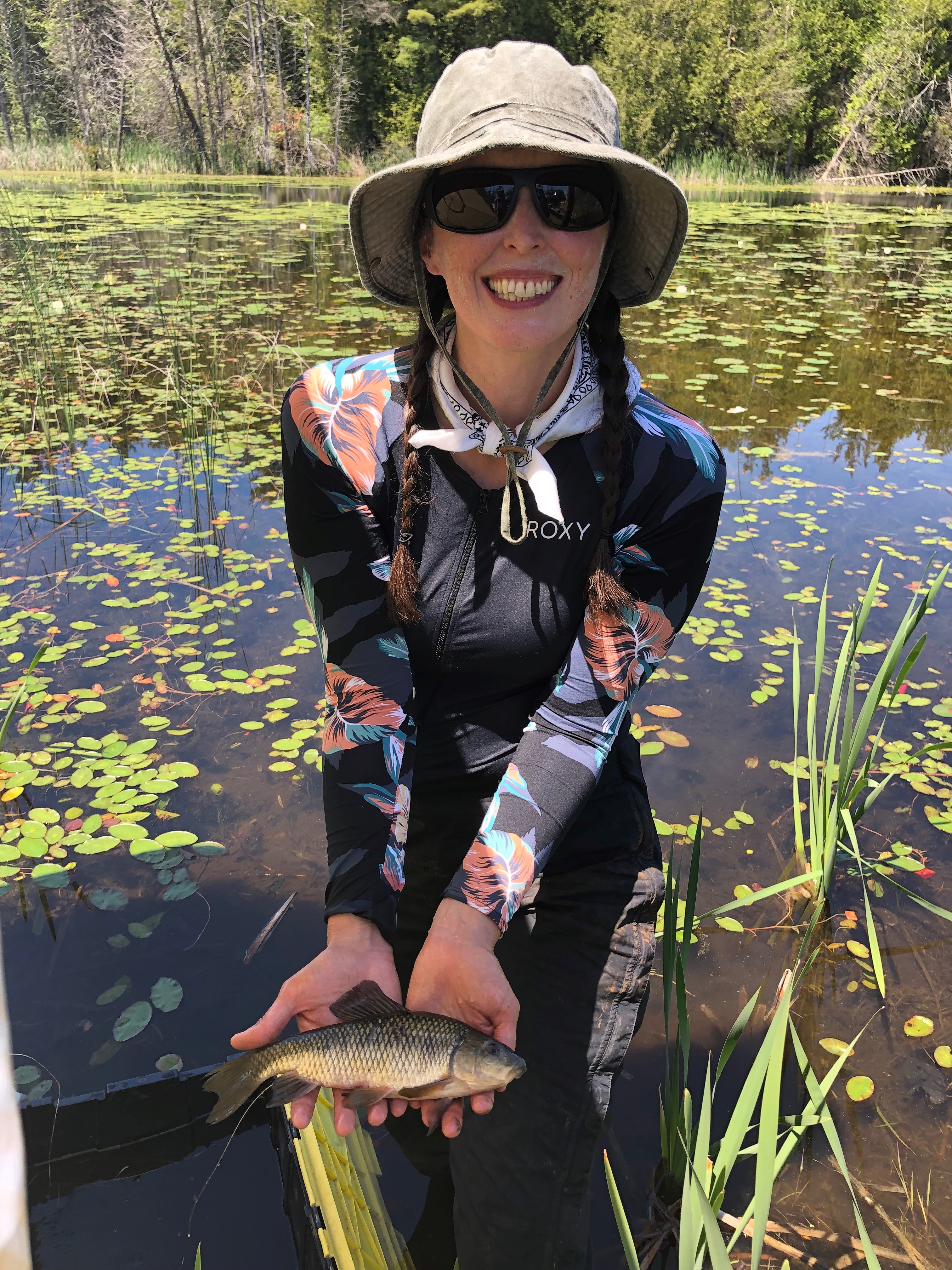
I am a PhD student in the Department of Physical and Environmental Sciences at UTSC, co-supervised by Nick Mandrak and Lauren Chapman of McGill University. I have a Bachelor’s degree in Zoology from UofT, and a Masters in Conservation Biology from the University of New South Wales in Australia and Victoria University of Wellington in New Zealand where I studied kangaroo response to a potential solution for preventing disease transmission into a water catchment and developed a management plan for a group of offshore islands on behalf of an indigenous Māori tribe. Outside of academia, I worked for many years as a fisheries biologist in environmental consulting, primarily conducting aquatic monitoring and assessment work around nuclear and industrial facilities in and around the Great Lakes, and then was the Scientific Coordinator for a cloud forest reserve in Costa Rica where I oversaw research in the reserve and spent my nights chasing glass frogs. My PhD research focuses on developing a habitat occupancy model for the elusive and poorly understood endangered Lake Chubsucker (Erimyzon sucetta) while examining their behavioral responses to extreme temperature and dissolved oxygen conditions to assess their current and future vulnerability to climate change. As part of this process, I am also working on developing a model for the complex dissolved oxygen cycling that occurs in shallow heavily vegetated lakes. If I’m not working, that usually means I’m out with my dog, but I also enjoy working on crafting projects, playing board or video games, and baking.
Dominique Rumball(she/her), MSc
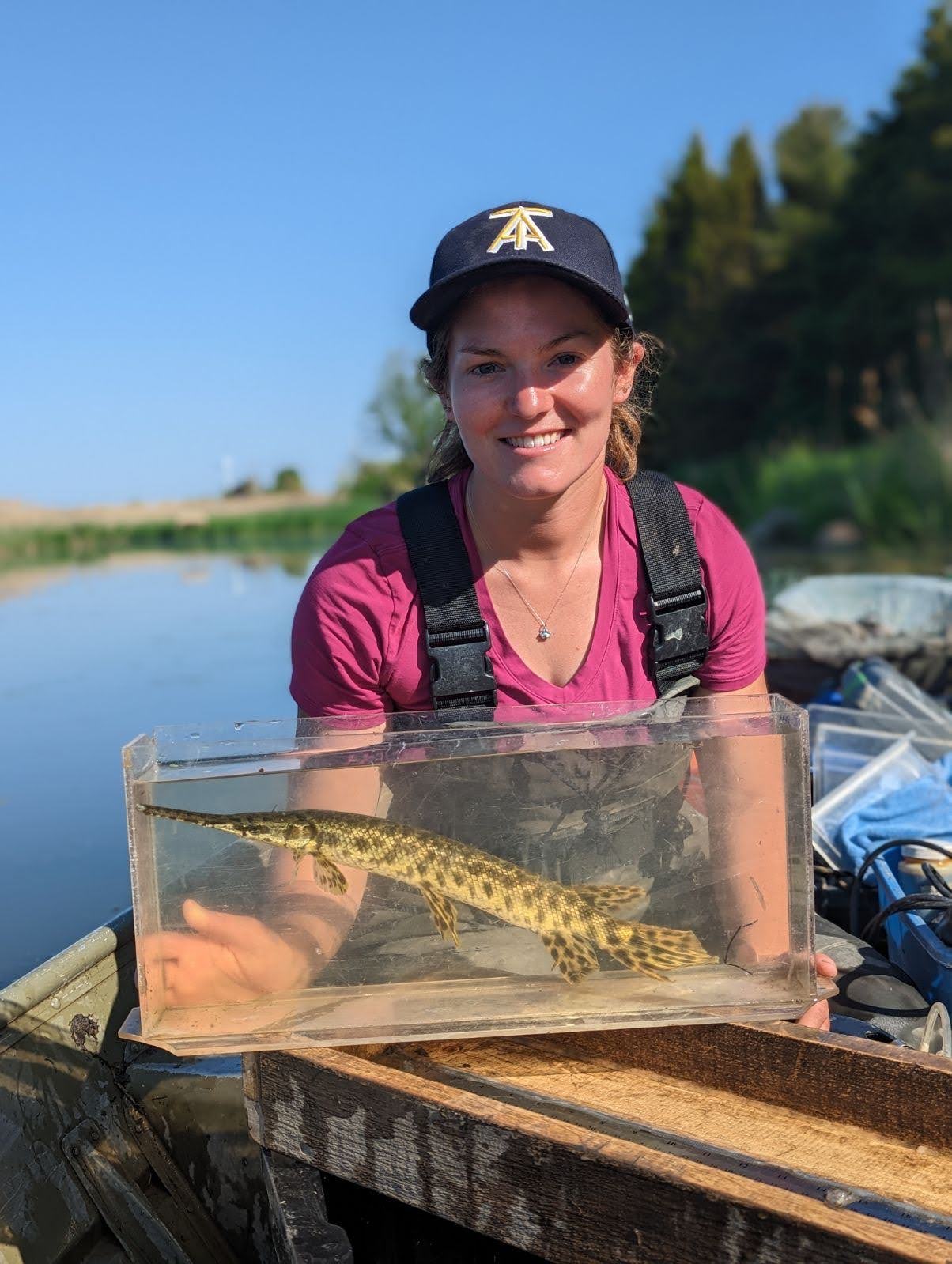
I am a PhD student in the Department of Physical and Environmental Sciences at the University of Toronto. I completed my undergraduate studies at Queen’s University, earning a Bachelor of Science with Honours in Biology alongside a Business Certificate. My passion to make positive change for the environment and my desire to be a part of a lab with an inclusive culture brought me to the University of Toronto where I completed my MSc under the supervision of Dr. Mandrak. My PhD research focuses on evaluating the effectiveness of wetland restoration for aquatic species at risk in the Great Lakes basin. I use robust study designs and build on the foundation of ecological knowledge to test existing approaches and develop novel approaches to implement and evaluate restoration. I am optimistic that my research will assist the recovery of aquatic species at risk and fill in knowledge gaps in the field of restoration ecology. I enjoy sharing my passion with others as a teacher, science educator, and children’s book author. When I am not studying, you will find me at the rugby pitch, spending time with my family, and enjoying a nice cup of tea. I look forward to opportunities to obtain new experiences, collaborate, and implement novel approaches in the fight to preserve our natural world.
Ian Smith (he/him), MSc, OLS/OLIP, EP, CERP
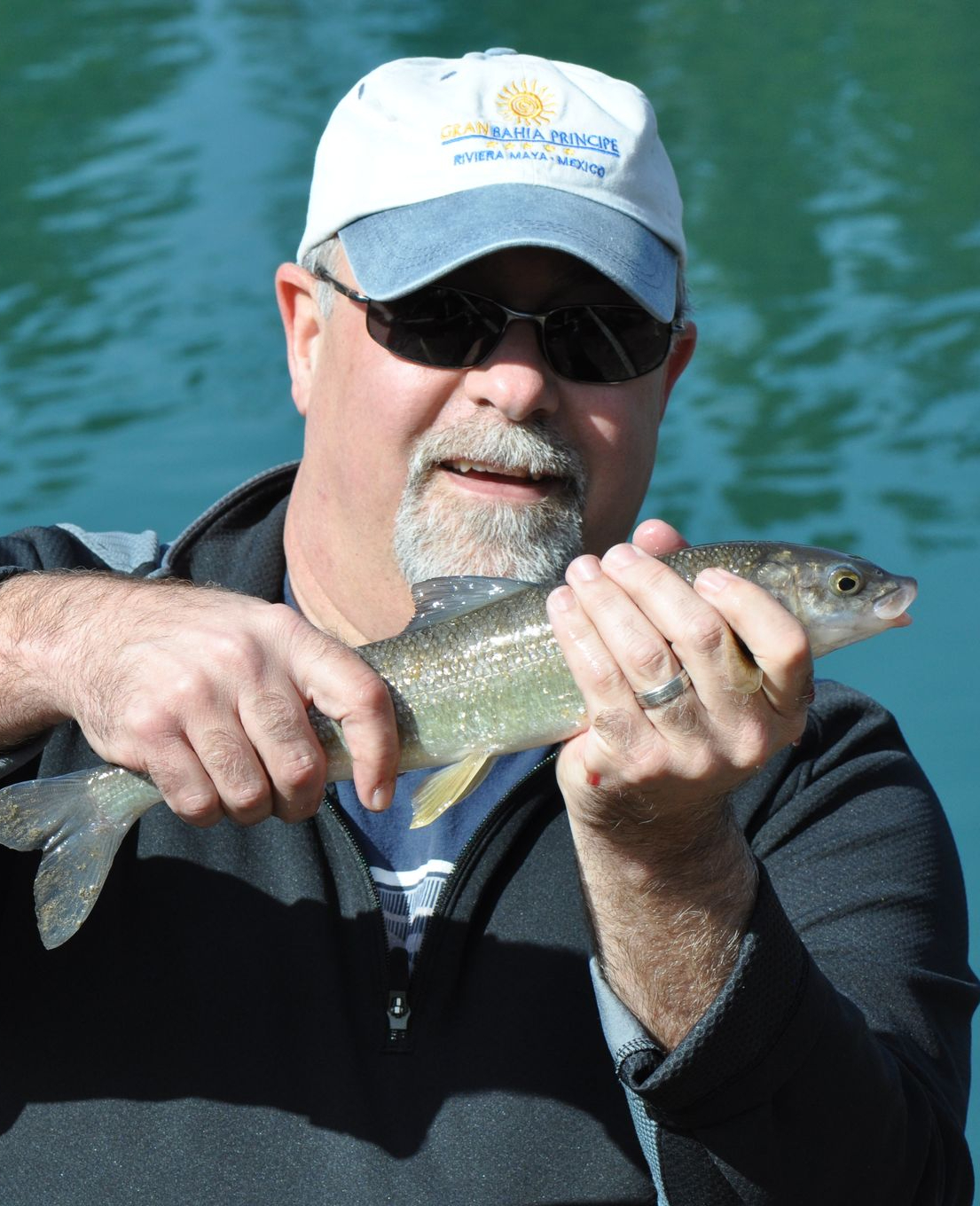
Ian Smith is a Fluvial Geomorphologist and Land Information Specialist with more than 35 years of specialized experience in stream restoration, Natural Channel Design (NCD), LIDS/GI implementation, erosion control, bank stabilization, plus the design of constructed wetlands for storm and wastewater treatment. He has worked in the public sector (Regional Government), the private sector (consulting) and with various environmental Non – Government Organizations (NGOs). Ian has extensive practical experience developing innovative fluvial geomorphic and wetland designs as well as undertaking complex river/stream and coastal systems analyses, using geospatial tools (GIS/RS). He led the team that designed the award winning (OPWA Project of the year, 2008; SWANA Excellence award, 2010) Chedoke Creek Bank Stabilization/Restoration for the City of Hamilton. He also led the eco-hydraulics and geomorphic design for the Beaver Creek drainage system in the Town of Fort Erie that successfully recreated important habitat for Grass Pickerel, Esox americanus vermiculatus, a species of “Special Concern” under the Species at Risk Ontario Act. Ian was awarded the 2017 ECO Canada National Environmental Impact Award, for efforts in the study/restoration of Niagara’s 12 Mile Creek, Niagara’s last known cold water Brook Trout habitat.
Ian is a Ph.D. student in the Department of Physical and Envir onmental Sciences at the University of Toronto’s Scarborough Campus, supervised by Dr. Nicholas Mandrak. He completed an Engineering Technology Diploma at Mohawk College, a Bachelor of Mathematics undergraduate degree at the University of Waterloo, a graduate certificate in Environmental Assessment at Lakehead University, and an M.Sc. in Earth Sciences (Fluvial Geomorphology) at Brock University . His graduate research at Brock University was focused upon “Hydraulic and Fluvial Geomorphological Models for a Bedrock Channel Reach of the Twenty Mile Creek” within the Niagara Region. Ian’s current research interest is dedicated to assessing the efficacy of habitat creation for various aquatic species given standardized Natural Channel Design (NCD) techniques and current best management bio – engineering practices.
In his spare time, Ian enjoys travel (particularly to experience jazz music and food ) and the outdoors. He is an avid scuba diver and fly fisher, also happy to canoe and kayak any and all waters: white water to flat water. Ian volunteers with Trout Unlimited Canada where he is a board member and scientific advisor for the Niagara Chapter. You can read more about my work here!
PhD Lab Members (McGill University):
Suncica Avlijas, MSc: PhD Candidate co-supervised with Tony Ricciardi.
Dustin Raab, MSc: PhD Candidate co-supervised with Tony Ricciardi.
MSc Lab Members:
Jack Gadoury, MSc Candidate (co-supervised by Dr. N. Lovejoy)
Paige Lipzinski, MSc Candidate (co-supervised by Dr. L. Chapman)
UTSC Mandrak Lab Alumni:
Kate Fredericks, MSc , 2024-2025
Samuel Woods, MSc , 2024-2025 (co-supervised by Dr. N. Lovejoy)
Dr. K. Greenham, PhD, 2018-2025
Dr. J. Hubbard, MSc, PhD, 2017-2025
Kate Storey, MSc, 2023-25 (McGill, Co-supervised by Dr. A. Ricciardi)
Ian Smith, MSc, 2020-2023 (Windsor, Co-supervised by Dr. H. MacIsaac)
Dr. Alex Van Nynatten, PDF, 2019-2023
Dr. Tharusha Wijewardena, PhD, 2018-2023 (Laurentian; co-supervised with Dr. Jacqueline Litzgus)
Dr. Thais Bernos, PhD, 2017-2023 (Co-supervised by Dr. K. Jeffries)
Dr. Emily Chenery, PhD, 2016-2022 (Co-supervised by Dr. P. Molnar)
Dr. Meagan Kindree, MSc, PhD, 2016-2022
Dr. Lifei Wang, PDF, 2019-2022
Ben Zdasiuk, MSc, 2022 (Co-supervised by Dr. M-J Fortin)
Dr. Paul Bzonek, MSc, PhD, 2015-2022
Dr. Anas Mohammad, PDF, 2019-2021
Kavishka Gallage, MSc 2020 (Co-supervised by Dr. N. Lovejoy)
Dr. Tej Heer, PhD 2015-2020
Alexandra Leclair, MSc, 2019-2020 (Co-supervised by Dr. A. Drake)
Courtney Leermakers, MSc, 2019-2020 (Co-supervised by Dr. M. Cadotte)
Lindsay Potts, MSc, 2019-2020 (McGill, Co-supervised by Dr. Lauren Chapman)
Dr. Sara Campbell, PhD, 2014-2020
Dr. Fielding Montgomery, PhD, 2014-2019 (Co-supervised by Dr. S. Reid)
Dr. Rowshyra Castañeda, PhD, 2014-2019 (Co-supervised by Dr. O. Weyl)
Dr. Nathan Lujan, PDF, 2016-2018
Brett Allen, MSc, 2016-2017
Shannon Ritchie, MSc, 2016-2017 (Co-supervised by Dr. M. Cadotte)
Dr. Pasan Samarasin, PDF, 2015-2017
Dr. Andrew Drake, PDF, 2013-2016
Natalie Rook, MSc, 2015-2016 (Co-supervised by Dr. S. Reid)
Gabrielle Malcolm, MSc, 2013-2015 (Co-supervised by Dr. N. Lovejoy)
 Mandrak Lab